Options Mall logo
Issue Nº 01 · 2026The Trouser FormPublished by Options Mall
  1. Home
  2. Style Journal

Style Journal

Seven essays on fit, colour, cloth and the quiet discipline of dressing well for work.

In this issue

  1. 01How to choose the right formal trouser fitA fitting-room method
  2. 02The essential colours in a professional wardrobeFive tones, endless outfits
  3. 03Understanding slim, regular and straight fitsA side-by-side study
  4. 04How to coordinate formal trousers with shirtsContrast, tone, pattern
  5. 05The role of fabric in formal dressingAn essay on cloth
  6. 06Common formal trouser styling mistakesEight errors to avoid
  7. 07Building a versatile business wardrobeA three-tier plan
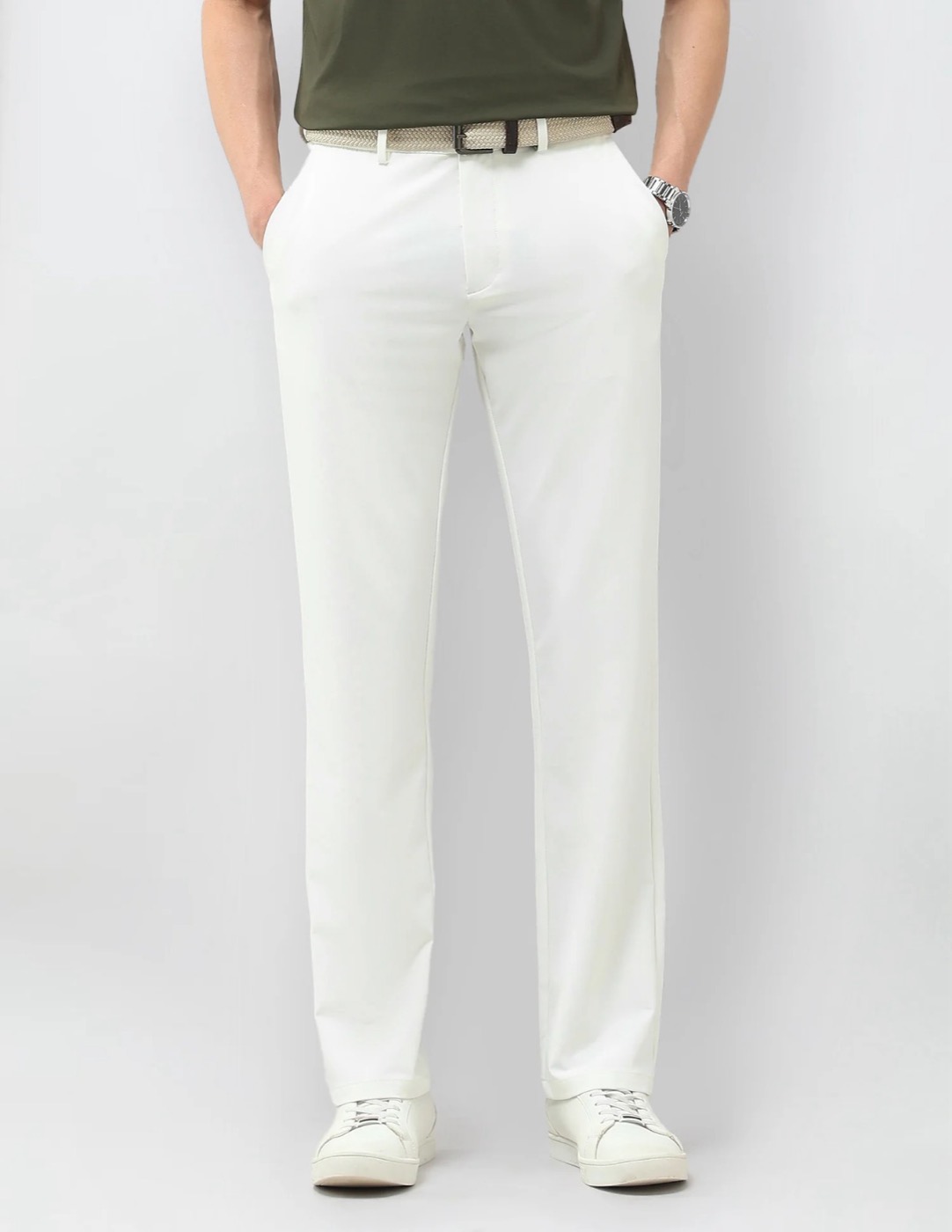
White trousers worn with an olive T-shirt, belt and white sneakers
CoverWhite trousers, olive knit — a study in contrast

Editor’s note

Good dressing is rarely about the newest thing. It is about the right thing, worn well.

This issue is written for anyone who wears formal trousers to work — whether every day or a few times a month. The guidance is practical and general; every body, workplace and wardrobe is different, so treat these essays as a framework to adapt rather than rules to obey.

Questions about a specific trouser? Contact Options Mall.

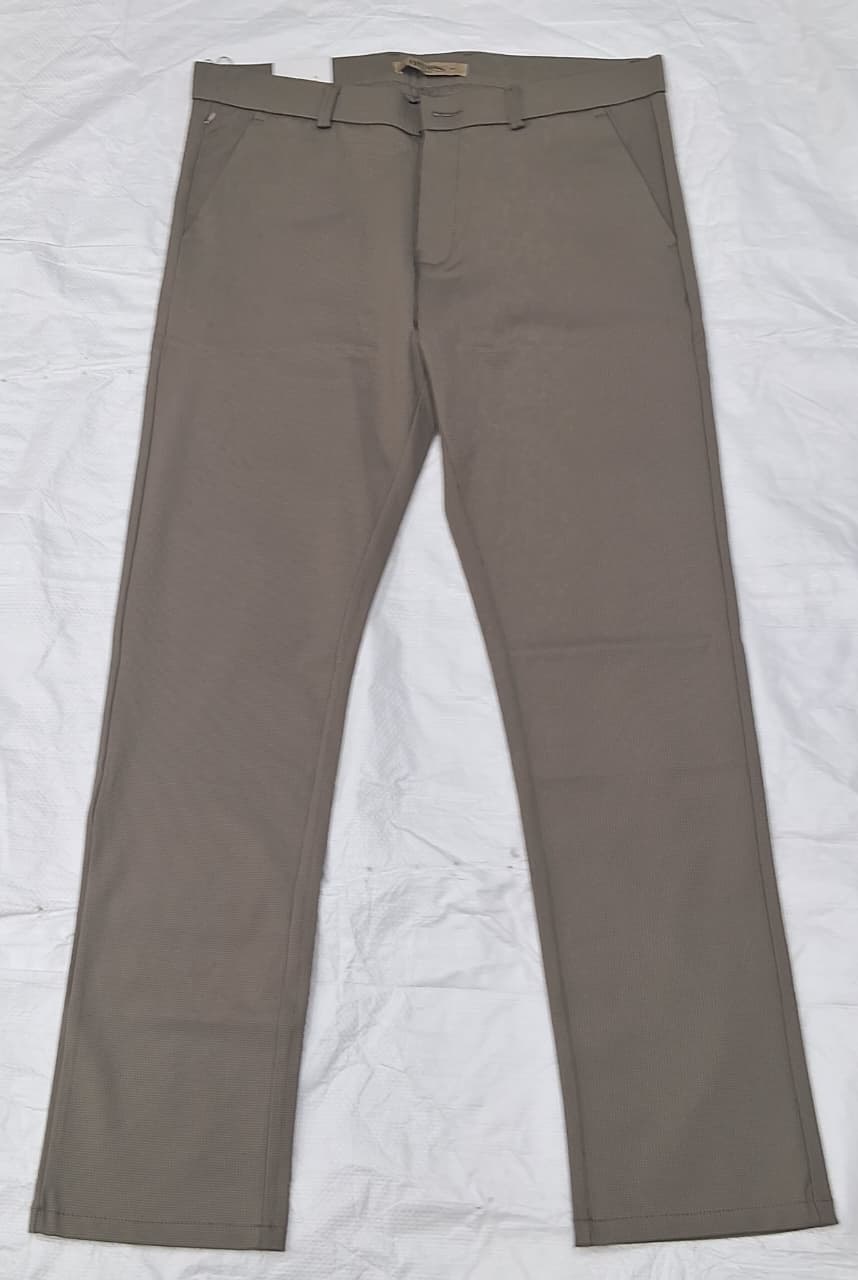
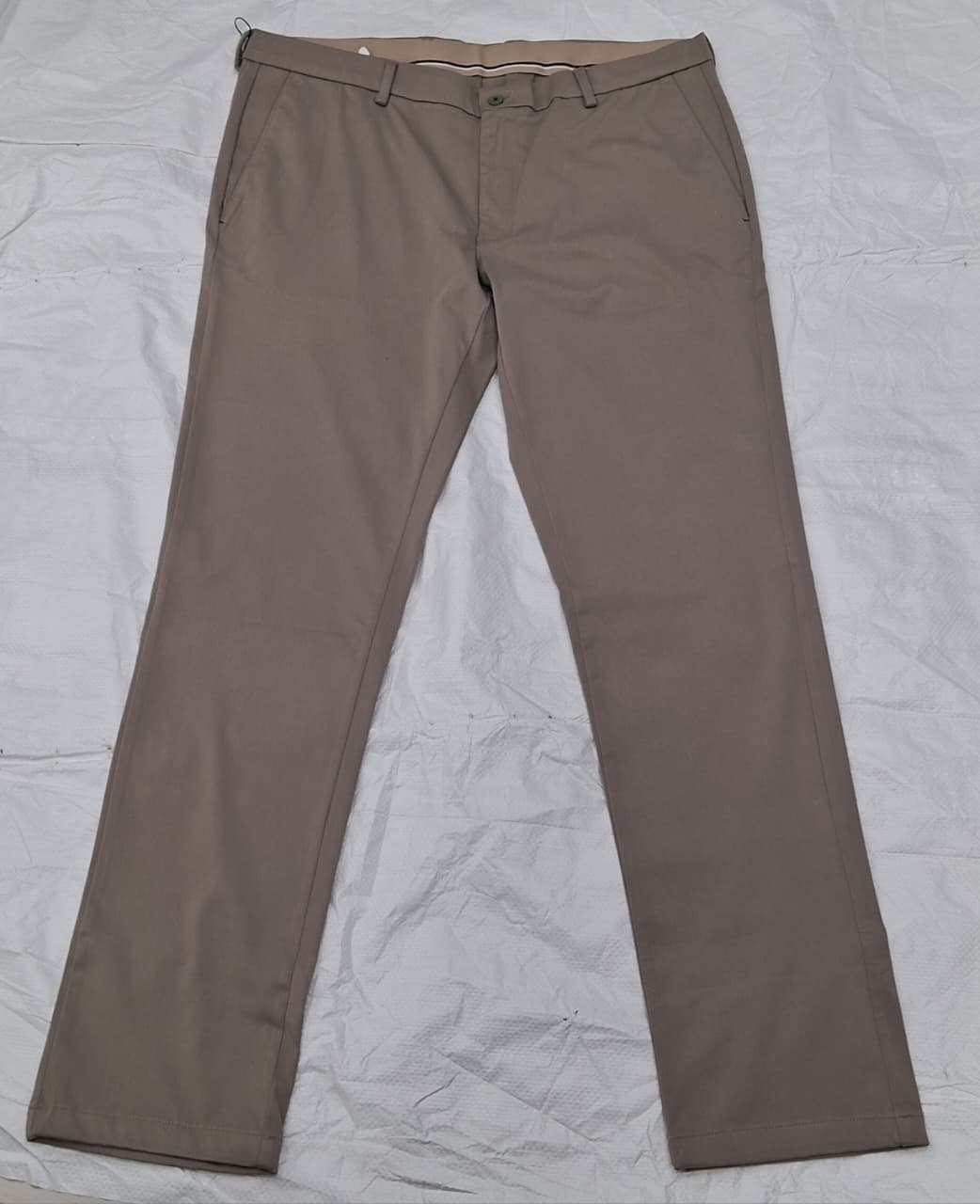
Taupe formal trousers laid flat
Fig. 01Taupe, laid flat for inspection

Essay 01 · FitAbout 6 minutes

How to choose the right formal trouser fit

Most fitting-room mistakes happen because we judge a trouser from the front, standing still, under flattering light. A better method is to work from the top down, move around, and look from every side. Fit is a sequence of checks — and the order matters, because some problems can be fixed by a tailor and some cannot.

1. Begin at the waist

Fasten the trouser without a belt. It should stay in place at its intended height without gripping. Two fingers should slide into the waistband comfortably. A waist that is slightly too large can usually be taken in; one that is too small is far harder to rescue.

2. Read the seat

Turn and look over your shoulder, or use a second mirror. The cloth should follow the curve of the seat and then fall straight. Horizontal strain lines mean it is too tight; drooping folds mean it is too loose. Seat issues are difficult to alter, so treat this as a deciding factor.

3. Test the thigh and rise

Sit down. Then crouch. The thigh should have a little ease, and the rise should allow you to sit without the waistband dropping at the back or the crotch pulling. If the trouser only works standing, it does not work.

4. Choose the leg line

Now decide the silhouette — slim, straight, tapered or regular — based on your build, your shoes and your workplace. A slim leg looks contemporary; a straight leg looks composed; a tapered leg balances comfort above with neatness below.

5. Finish with length

Wear the shoes you will wear with the trousers. A slight break or no break suits most formal trousers today. Length is the easiest and most common alteration, so do not reject an otherwise good trouser because it is too long.

The short version: choose for the seat and thigh, accept small adjustments at the waist and hem, and always sit down before you decide.
Essay 02 · ColourAbout 5 minutes

The essential colours in a professional wardrobe

A professional wardrobe is built like a palette: a few dependable base tones, then a handful of accents.

The more neutral and adaptable a trouser colour, the more combinations it creates with shirts, jackets and shoes you already own. That is why most professional wardrobes begin with dark, cool tones and move gradually towards warmer and lighter ones. The order below is a sensible sequence for building up a collection over time.

  1. Charcoal

    Formal, versatile and forgiving. Works with black and brown shoes and nearly every shirt.

  2. Navy

    Rich and calm; excellent with white and light-blue shirts and brown leather.

  3. Mid or light grey

    The great connector — pairs with navy blazers, patterned shirts and both formal and smart shoes.

  4. Beige or stone

    Lightens the wardrobe for daytime, warm weather and relaxed offices.

  5. Brown, taupe or olive

    Characterful accents, best added once the foundation is complete.

Black deserves a special mention. It is the most formal trouser colour, but it can look severe in daylight and pairs only with black shoes. Many wardrobes are better served by charcoal for daily wear, keeping black for evening and formal occasions.

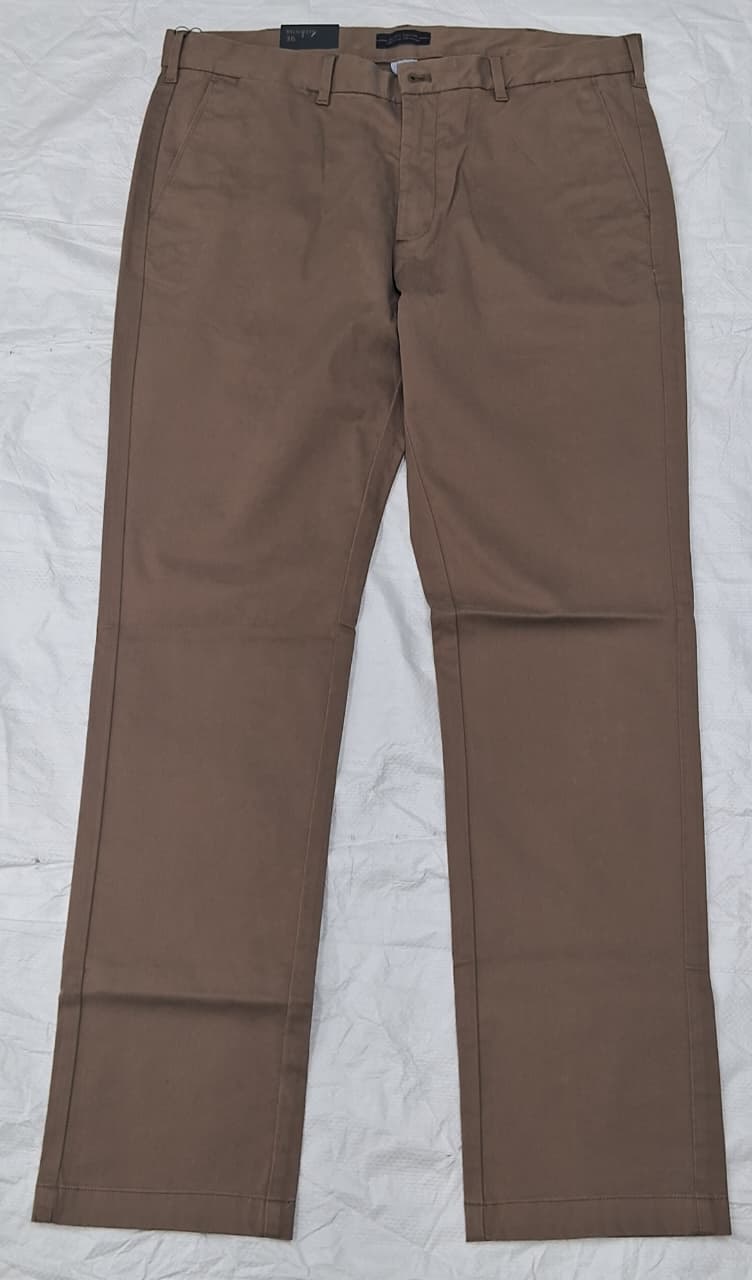
Brown formal trousers laid flat
Fig. 02Brown — an accent, once the base is set

Essay 03 · SilhouetteAbout 5 minutes

Understanding slim, regular and straight fits

Three words appear on more trouser labels than any others. They describe different ideas of how cloth should relate to the leg.

Slim fit reduces fabric through the seat, thigh and leg so the trouser follows the body closely. It looks sharp and contemporary, and it suits fitted shirts and sleek shoes. Its weakness is movement: if the thigh is too narrow, it pulls when you sit.

Regular fit keeps comfortable room through the seat and thigh and a moderate leg opening. It is the most forgiving fit for long days and the most natural partner for traditional suit jackets. Its risk is excess — if it is too generous, it can look dated.

Straight fit describes the line from knee to hem: it stays roughly the same width. Straight fits can be trim or relaxed at the top; what defines them is the vertical column of the lower leg.

Slim, regular and straight fits compared
FitSeat & thighLeg lineBest with
SlimCloseNarrows to the hemFitted shirts, slim shoes
RegularComfortable easeModerate, straight-fallingSuit jackets, Derbies
StraightTrim to moderateConstant from knee to hemMost formal shoes

Sizing names are not standardised: one brand’s “slim” may be another’s “tailored”. Always try the trouser on rather than relying on the label alone, and use the fit laboratory checklist.

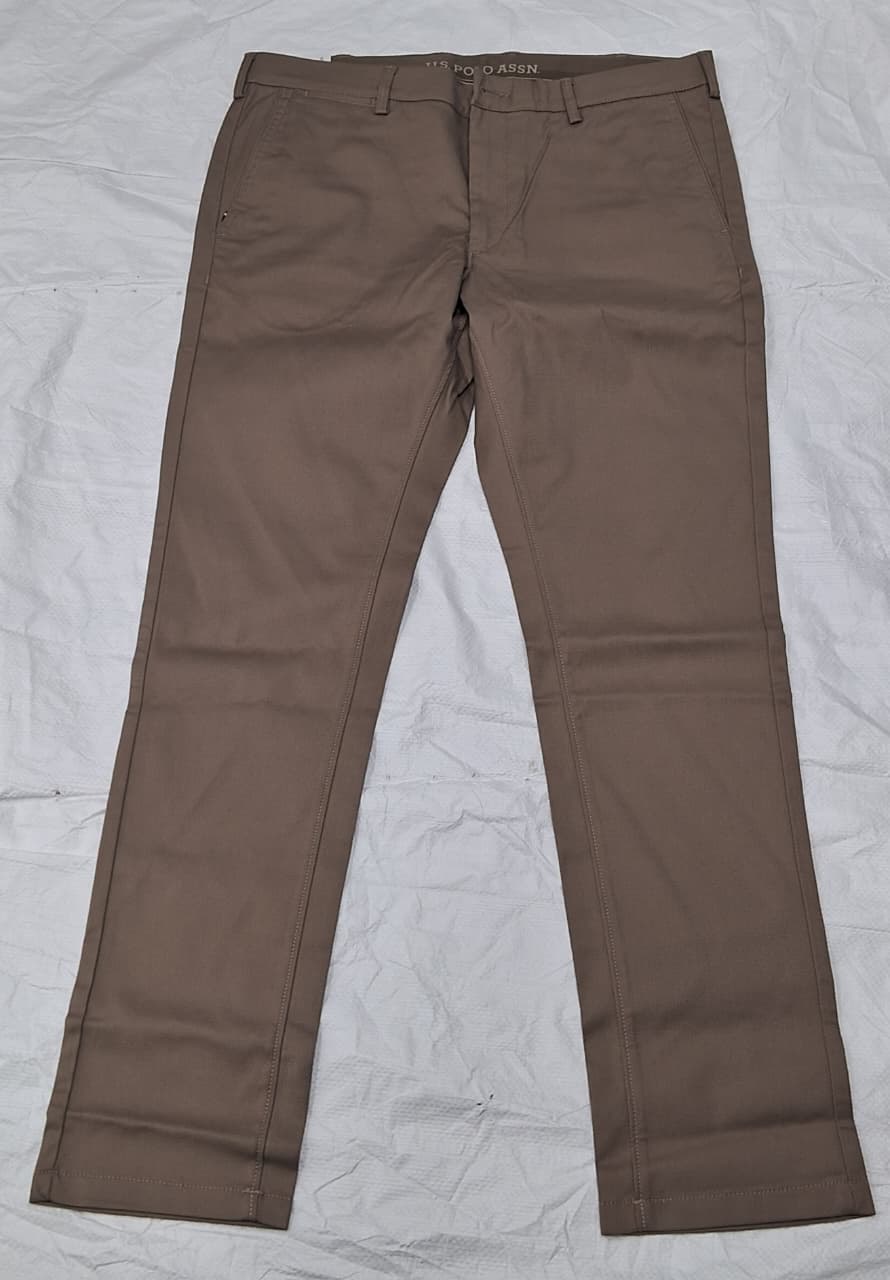
Brown formal trousers laid flat showing a straight leg
Fig. 03A straight-falling leg
Brown formal trousers laid flat
Fig. 04Brown trousers — a canvas for blue and white

Essay 04 · CoordinationAbout 5 minutes

How to coordinate formal trousers with shirts

Three principles — contrast, tone and pattern — solve almost every shirt-and-trouser decision.

Contrast

A light shirt with a dark trouser (or the reverse) creates clear separation and looks crisp and formal. Low contrast — navy with dark blue, for instance — looks moodier and less formal, and can flatten the outfit under office lighting.

Tone

Cool trousers (navy, charcoal, grey) partner naturally with cool shirts (white, blue, lavender). Warm trousers (beige, brown, olive) welcome warm or earthy shirts (cream, sage, rust) as well as classic blue and white.

Pattern

Let only one item carry the pattern. A textured or checked trouser wants a plain shirt; a striped or checked shirt is happiest above a plain trouser. If both are patterned, vary the scale dramatically.

Charcoal + white

The most formal pairing. Meetings, presentations, interviews.

Navy + light blue

Tonal and calm; polished without severity.

Mid grey + pink

Quietly confident; softens a formal outfit.

Beige + navy

A dark shirt over a light trouser — relaxed but sharp.

Brown + light blue

Warm and cool together; endlessly reliable.

Olive + white

Clean and modern for smart-professional days.

Essay 05 · ClothAbout 4 minutes

The role of fabric in formal dressing

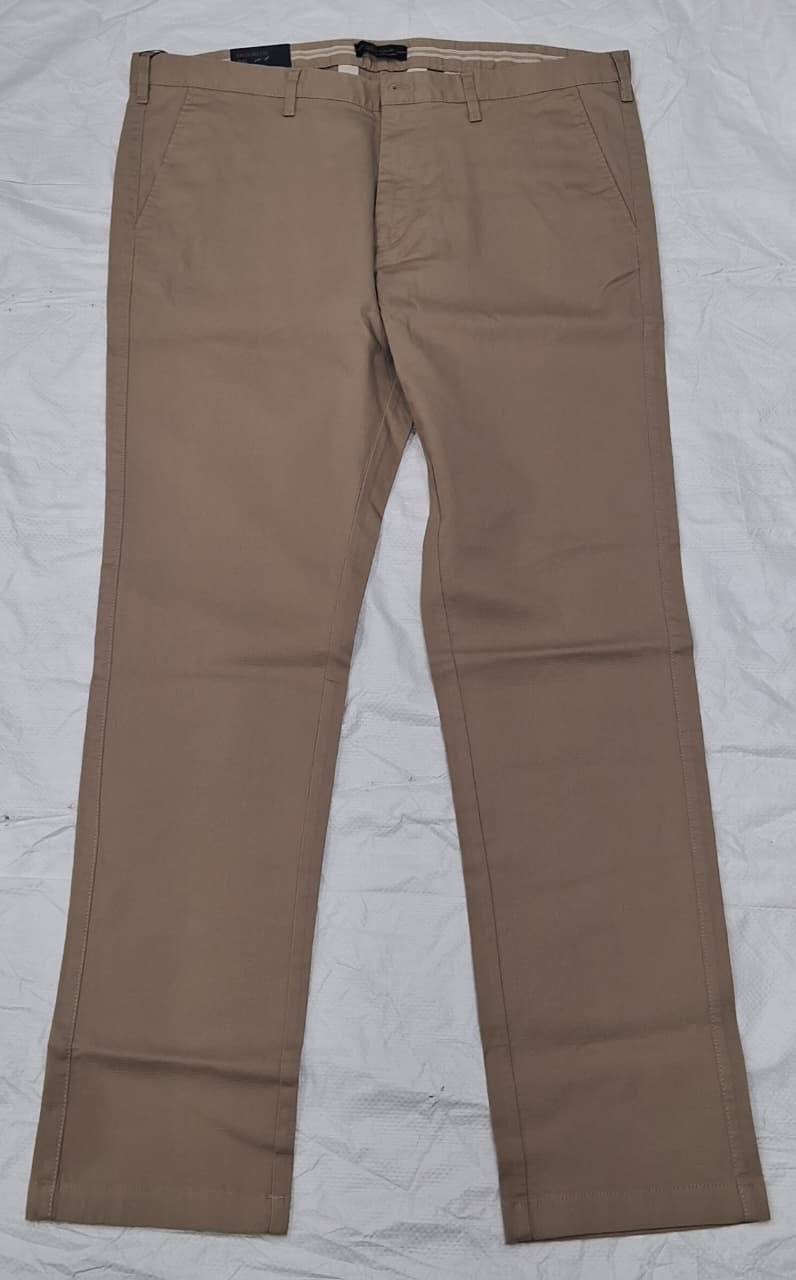
Khaki formal trousers laid flat

Cut gets the attention, but cloth decides the outcome. Two trousers in the same colour and the same pattern will look and feel completely different if one is made in a fluid, finely woven cloth and the other in a stiff, shiny one. Fabric governs how a trouser drapes from the seat, how it holds its crease, how it copes with heat, and how it looks at six o’clock in the evening.

Drape is the first thing fabric changes. Heavier, denser cloths hang straight and resist wind and movement; lighter cloths move with the body. For a formal trouser, the ideal is a cloth that falls cleanly without clinging — a quality often found in wool and in well-balanced blends.

Then there is comfort. In a warm, humid climate like Mumbai’s, breathability can matter more than anything else. Open weaves, natural fibres and lighter weights let air circulate, while some dense synthetic cloths trap heat. Equally, an air-conditioned office may call for something a little more substantial.

Finally, fabric shapes appearance over time. A cloth that recovers from creasing keeps its line through a long day; one that wrinkles easily will need regular pressing. A cloth with a subtle texture forgives small creases; a very smooth one shows every one.

None of this means there is a single best fabric. It means choosing deliberately: matching the cloth to your climate, your schedule and how much time you are willing to spend on care. To understand the options in more depth, visit the cloth archive.

Essay 06 · StylingAbout 6 minutes

Common formal trouser styling mistakes

Most of these are small. All of them are visible.

  1. Too much length

    Fabric stacked in several folds at the ankle makes the leg look shorter and the outfit look careless. A single slight break, or none, is cleaner.

  2. Too tight through the thigh

    Slim does not mean tight. Pulling across the thigh and open-flaring pockets are signs to size up or choose a different cut.

  3. Mismatched belt and shoes

    A black belt with brown shoes, or vice versa, breaks the line at the waist. Keep them in the same colour family.

  4. Overloaded pockets

    Phones, keys and wallets distort the hip and seat, and stretch the cloth permanently over time.

  5. A faded or missing crease

    A formal trouser without its crease looks tired. Press regularly, or choose cloths that hold a crease well.

  6. Casual shoes with formal trousers

    Chunky trainers under classic tailored trousers confuse the message. Match the formality of the shoe to the trouser and the occasion.

  7. Competing patterns

    A checked trouser and a checked shirt of similar scale fight each other. Let one piece lead.

  8. Ignoring the seat

    Many people check only the front in the mirror. Saggy or strained seats are one of the most common — and most noticeable — fit problems.

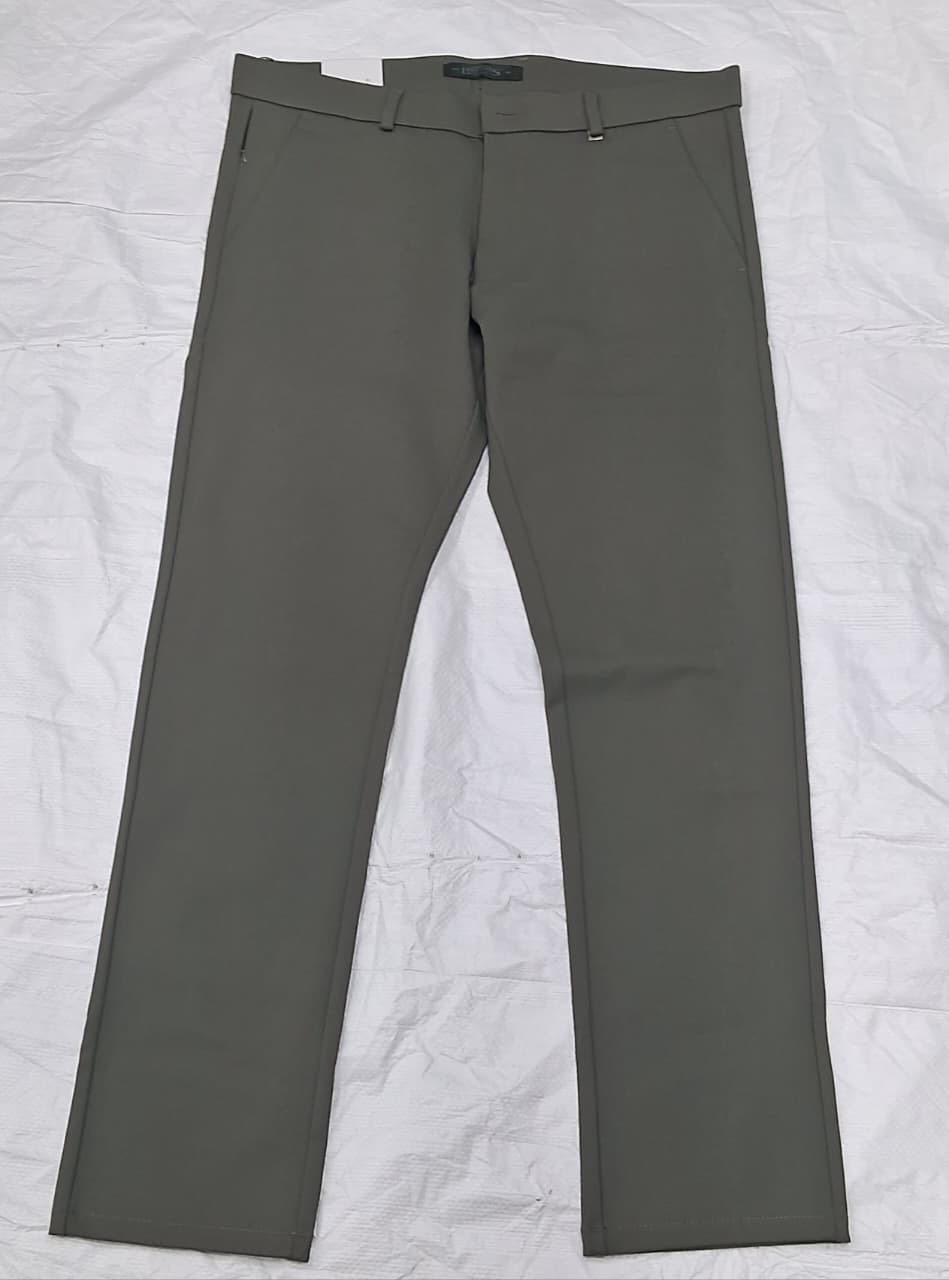
Olive formal trousers laid flat
Fig. 07Olive — a tier-three character piece

Essay 07 · WardrobeAbout 5 minutes

Building a versatile business wardrobe

A wardrobe is versatile when almost everything in it works with almost everything else. Trousers are where that versatility begins.

Start with fewer, better-chosen pieces and build in tiers. Each tier should multiply the outfits made possible by the one before it. Rotate trousers rather than wearing the same pair on consecutive days — it extends their life and keeps their shape.

Tier one

Foundation

Charcoal and navy formal trousers in your best-fitting cut. Add white and light-blue shirts, black and dark-brown leather shoes, and matching belts.

Tier two

Expansion

A mid-grey and a beige or stone trouser. Add a pink or patterned shirt and a pair of loafers. The number of combinations now multiplies.

Tier three

Character

A brown, olive or textured trouser, plus fine knits or polos for smart-professional days and an evening-ready darker shirt.

Before adding anything new, ask: does it work with at least three things I already own? If it does, it belongs. If it does not, it is a costume, not a wardrobe piece. For a fuller guide to dressing for work, see The Business Wardrobe.